
If you have ever watched a wheel slow under the Adelaide afternoon sun and wondered whether the dealer’s throw follows a pattern, you have already brushed against roulette visual ballistics explained. The idea sits in a grey area between observation and expectation, and that is exactly where this guide starts. We will not pretend there is a sure way to read a spin, but we can look at what players actually notice, where the claim holds water, and where it quietly falls apart.
What the term actually means on the floor
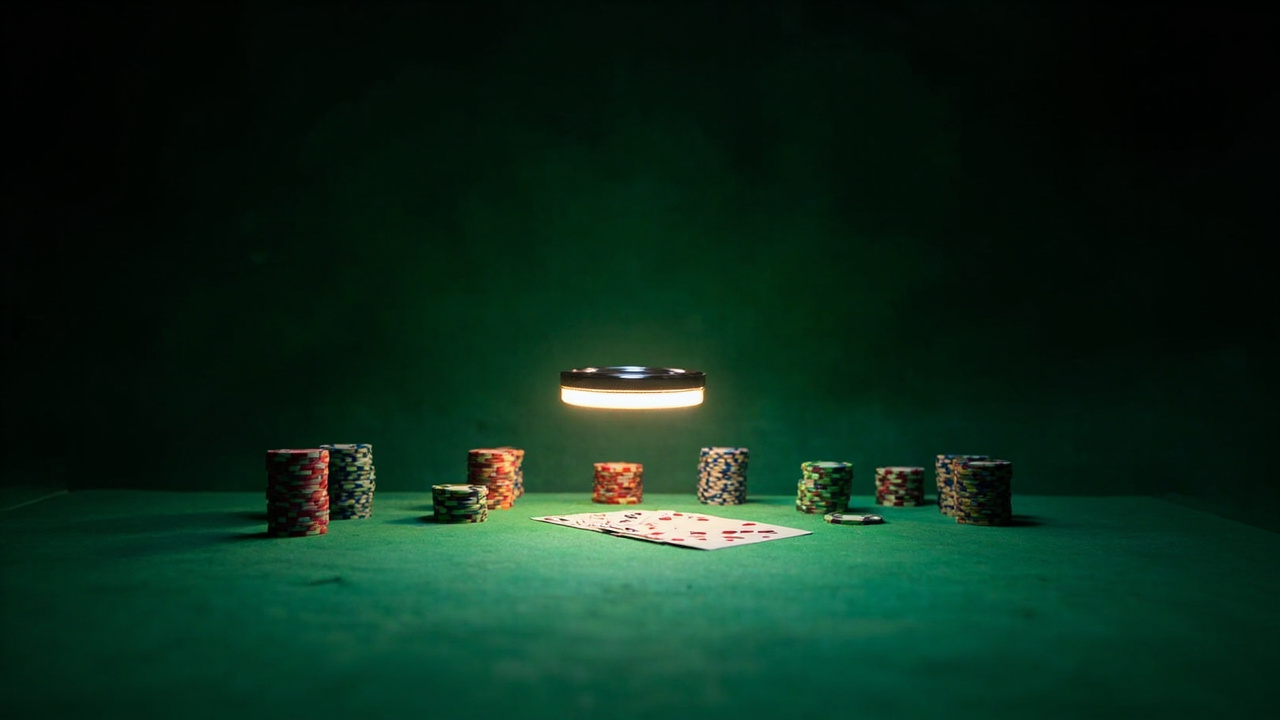
Roulette visual ballistics explained is really a shorthand for watching the physical motion of a wheel and ball, then trying to estimate where the ball might settle before it does. In practice, that means paying attention to the rotor speed, the ball’s drop point, and the way the ball scatters across the frets as friction takes hold. None of those cues are secret, and none of them guarantee an outcome, but they do describe a real sequence of events that happens on every spin.
The useful part is discipline, not prediction. A careful observer can note that a particular wheel tends to slow in a certain range, or that a dealer’s release point varies by a few degrees from hand to hand. What separates a reasonable observation from a costly fantasy is the willingness to accept variance. Even when the inputs look familiar, the bounce is still governed by friction, imperfections, and plain chance. That is why any practical take on roulette visual ballistics explained has to start with what can be seen, then stop short of what cannot.
For an ordinary Australian reader, the everyday version of this is closer to watching a busy intersection than reading a spreadsheet. You might notice that the traffic light on your walk to work always seems to linger a second longer at one end of the block, and you adjust your pace accordingly. That is pattern recognition with a modest payoff. Roulette visual ballistics explained works the same way in principle: you notice a repeatable cue, you adjust your expectation, and you still leave room for the unexpected. The difference is that a light can be timed; a live wheel still carries enough randomness to humble anyone who treats a hunch as a method.
How a player should weigh the claim
What you can actually observe
A sensible approach begins with the parts of the spin that are visible and repeatable. The rotor speed is the first thing worth tracking, because it sets the window for how long the ball stays in play. The second is the release, which varies by dealer and by hand, and the third is the scatter pattern once the ball hits the track and drops. Taken together, these are not a system; they are a set of observations that can help a player understand why one spin looks similar to the last and why the next one does not.
There is a practical ceiling here, and it is worth naming plainly. Even a patient observer is working with a moving target, because the same wheel can behave differently as the ball, the humidity, and the dealer’s rhythm change across a session. That is the point where the conversation shifts from observation to expectation, and that shift is where most claims overshoot. When I have sat across from suppliers and operators planning a launch, I have seen the same discipline matter in a different form: a partner pitch only earns trust when the numbers, the limits, and the user path are consistent from the first demo to the live environment. The same standard applies here. If the observation cannot be repeated under slightly different conditions, it is not a method yet.
Where the claim stops holding up
The second half of the question is where the sober judgement lives. A visual read can narrow what you pay attention to, but it cannot remove the randomness that defines the game. The ball still lands where physics and chance send it, and no amount of careful watching turns a negative expectation into a reliable edge. That is the difference between a useful habit and a misleading promise.
It helps to keep the comparison concrete. In other table games, the rules are explicit about what counts and what does not. Dice must hit the far wall of the craps table for a roll to count, and that rule exists because a clean, verifiable outcome matters more than any player’s read of the throw. In pai gow poker, the joker in pai gow poker is a limited wild card, which is a precise restriction rather than a free pass. Those examples are useful here because they remind us that a game’s credibility comes from clear rules and honest limits, not from a player’s confidence in reading the room. That same standard is what I apply when I weigh a supplier’s launch positioning: the offer has to be coherent, the mechanics have to be stated plainly, and the commercial story has to survive contact with reality.

Evie Clarke, Risk and Integrity Manager, Banksia Betting Partners, puts the caution directly: “A visual read can sharpen attention, but it cannot override the randomness built into the game, so the honest question is whether a player is observing a pattern or chasing one.”
Why the question matters to a player
The reason roulette visual ballistics explained keeps coming up is that it touches a very human instinct: we like to feel that attention can make a noisy situation more legible. For a player, that instinct is not useless. Watching a wheel carefully can make a session feel more deliberate, and it can help a player notice how often a “read” fails as often as it seems to work. That awareness is valuable because it changes how money and time are spent, even when it does not change the result of any single spin.
The practical takeaway is to treat the subject as a way of thinking, not a way of winning. If a player wants to engage with the idea, the useful questions are simple: what am I actually seeing, how often does it repeat, and what happens when it does not? A good answer keeps the player in control of the expectation rather than the other way around. That is the same kind of commercial discipline I look for when a supplier wants to move from a demo to a live operator relationship, because a launch that cannot hold its shape under scrutiny is not ready for the floor.
- Rotor speed: the rate at which the wheel turns during a spin.
- Scatter: the way the ball spreads across pockets after hitting the track or frets. le bandit demo
- Release point: where and how the dealer drops the ball into the wheel.
- Variance: the natural swing in outcomes that keeps any single read unreliable.